To begin
with, I was interested to learn “hyperconnected” students (i.e. those with
habitual need use devices connected to the internet), as referenced by Maloy,
et al (2013, p. 4) and the “generally positive” impact that technology will
have on current and future students. Being so interested, I reviewed the article,
Millennials
Will Benefit and Suffer Due to Their Connected Lives (Anderson, 2012), and
it seems the accepted “generally positive” votes in the poll among leaders was
only 55% vs. 42% that believed it may have negative, if not menacing results.
There were also those people who believed the impact of technology on such “hyperconnected”
students might be a combination of the two. I fall into the last category,
having raised three children over the courses of the decades between 1998 and current.
For instance, my eldest children were restricted in their access to computers,
video games, and television programming until age 5-8. After this age, they had
very limiting restrictions on their use of technology. This changed as
technology became more advanced, and a larger part of their classrooms and
society as a whole – and I feel my children have become “lost” to me, with
their eyes, and minds always turned to whatever technological product they have
in hand (iPods, iPads, Laptops, Cell Phones, Game Consoles). Still, the eldest
children, now ~17 and 14, have many good qualities and excel technologically
compared to the generations above them (including my own), and even their peers
who have had less access – being able to multi-task, researching skills, and comprehension
and filtering of applicable information with little of the negatives mentioned
in the article, such as, lacking face-to-face social skills, or lacking
deep-thinking capabilities. My youngest child, currently 3 years old, however,
seems to receive both the pros and the cons of technology equally, and this is
of great concern to me as a parent – he seems intent on the instant
gratification that his iPad allows – giving him games, educational
opportunities, videos, pictures, and more instantly at the touch of a screen!
It will be interesting to watch my children grow up in this digital age, to
determine how best to navigate this digital age, allowing for the improvements
that technology brings to their lives, while minimizing the negative impacts
that can be associated with it, as indicated in the article. I really feel that
longitudinal studies across the age ranges will yield the most accurate results
not only in the impact of this digital age upon children, and our future
students, but also yield insight into solutions which allow us to utilize and
hone the technological advances, while minimizing the negative impacts. Will it
be the case, in the future, where we have classes that teach students how to
interact properly in a face-to-face social environment, and how to write by
hand? Will there be classes in the future which teach our children and students
how to respond when technology is down? I also have legitimate concerns about the
removal of content knowledge in order to make way for more technological
courses, such as the removal of cursive and handwriting from the curriculum, as
the local school district tried out in my pre-teen’s writing courses last year
in Northwest Indiana. How will these future citizens be able to sign their
names in a secure manner, without learning cursive? In my opinion, an “X” most
certainly does not mark the spot where a signature should be. It certainly left
a lot of extra work for me, and for his future teachers to instruct him in how
to do something that should have been taught in his prior year’s instruction to
become a more successful and productive student and citizen.
Next,
I was excited to see some of the very tools that I use to educate my children
referenced in the section about “must-have” technologies for teaching by Maloy,
et al (2013, pp. 13-14). For instance, as a mother and future teacher, I utilize
three of these seven referenced technologies on a regular basis with my
three-year old son:
- Internet technologies such as virtual field trips, and educational websites. We use The Magic School bus games at the library, and take trips to far away jungles, exploring different aspects of the navigation and observations of the plants, animals, and landscape of the places we “travel” to. Sometimes, we use educational games on Nick Jr.
- Problem-solving/inquiry-learning technologies such as digital learning games and apps. These are installed on the household iPad, and are used frequently – between 3-4 times per week. We have various alphabet learning games which allow him to trace his letters, with the reward of accolades from animals, and a spoken voice on the screen, in addition to the positive reinforcement he garners from his mother and other family members. We also have virtual puzzles and matching games which enable him to problem-solve and learn. Sometimes, with help, and sometimes on his own, my son has learned to navigate these at a whim – and is learning his letters even better because of it!
- Multimedia technologies such as the camera and video-camera on the iPhone and the iPad. Based not only on my personal experiences with all three of my children utilizing most of these seven technologies, but also on my classroom observation experiences, I believe that technology belongs in the classroom and will have an overall positive effect on both student’s desire and ability to engage, learn, and expand their knowledge beyond the classroom.
Third,
the authors give us strategies for learning new technologies which included
creating small technology groups (Maloy, et al, 2013, p. 14), which provided
the example of grouped technologies enhancing the qualities of one another to
provide improved learning experiences in the classroom. In particular, I took
interest in the clickers, mentioned here and also in other areas in the book
(Maloy, et al, 2013, p. 287). One observation I made during my pedagogical
studies in recent years was that there was a negative impact on student
participation based upon the perception that they would be embarrassed by wrong
answers, where wrong answers were corrected and used as examples. Unfortunately,
this practice which assists teachers in answering the questions of students,
can have an unwanted side effect of singling a student out among their peers,
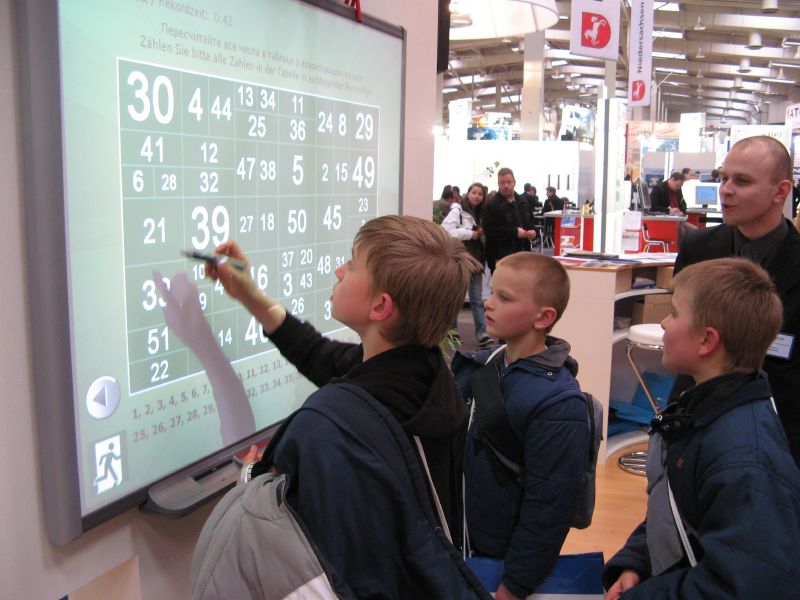
where bullying may find a springboard. The technology of the clickers, paired
with the computer, projector and screen, allow for anonymous answers when going
over exercises, reducing the fear of embarrassment, or judgment and allowing
students to feel a growing self confidence in a particularly challenging
assignment. This practice, as the book indicates, opens up discussions which
can expand ideas and insights. This expanded discussion can aid learner’s grasp
a subject, or particular concept and improve their receptivity.
As the above video shows,
the application of these grouped technologies, including, in particular, the clicker, is widely reaching and can help in terms of assessment and
tracking, listed as Assessment
technologies in the book by Maloy, et al (p. 13). Additionally, in our geographic
area, BYOD (Bring Your Own Device) has become popular, but has limits in terms
of what children have access to the tools – which my family experienced
first-hand until I was able to purchase the technology required – and clickers,
coupled with software available to teachers, can bridge this access gap while still
increasing engagement, assessment and assessment capabilities. I see the use of
clickers advancing and making a huge positive impact in all levels of group learning
environments, even including identification and interception of bullying
behaviors. I believe small technology groups, in particular clickers, are the
wave of the future to address each of these issues, as well as creating a
highly interactive, inquiry-based learning environments!
Finally,
while I considered myself previously to be fairly advanced and intelligent
regarding technological advancements for living and teaching in the 21st
century, clearly there are areas that are uncharted territory – both positive
and negative. While there are risks for such high levels of technology usage in
and out of the classroom, if a balance is found and applied, it seems the
benefits far outweigh the risks. Ultimately, had I participated in the Pew
Research Poll (above), I would say that new technologies in the classroom are
not only a benefit, but a necessity to address many of the issues students and
teachers face today – time constraints, bullying, the lack of engagement and
active participation – in order to become the 21st century teacher
that our 21st century students need.
Resources
Anderson, J., & Rainie, L. (2012, February 28).
Millenials will benefit and suffer due to their hyperconnected lives.
Retrieved January 22, 2015, from
http://www.pewinternet.org/2012/02/29/millenials-will-benefit-and-suffer-due-to-their-hyperconnected-lives/
UofS, G. (2013, December 12). A Really Quick Guide to Student Response Systems. Retrieved January 22, 2015, from https://www.youtube.com/watch?v=naCloNYRzkw
UofS, G. (2013, December 12). A Really Quick Guide to Student Response Systems. Retrieved January 22, 2015, from https://www.youtube.com/watch?v=naCloNYRzkw
Textbook - Maloy, Robert, Verock-O’Loughlin,Ruth-Ellen, Edwards, Sharon A., and
Woolf, Beverly Park (2013). Transforming Learning with New Technologies. 2nd
Edition. Boston, MA: Pearson Education, Inc.

Yay - first blog post submitted and with great visual enhancements and interactive components. Nicely done! :)
ReplyDeletePew Research always has some interesting studies and this one brings up some interesting points. Generally there is more than one side to the story and I think this is indicative here. The need for balance is sometimes overlooked in our daily routines. Sometimes we get caught up in using technology for technology's sake and not for the underlying purpose. As you mention, it will be valuable when results from more longitudinal studies are revealed.